
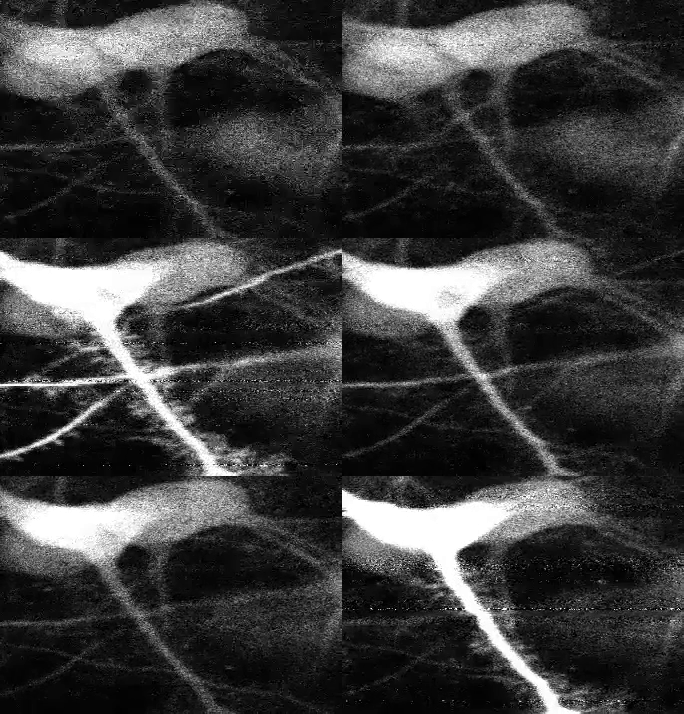
Human Translational Memory Unit
Established in 2026, the Human Translational Memory Unit (HTMU) extends our lab's hippocampal memory research into human tissue. Its dual purpose is to test hypotheses and molecular targets first identified in animal models, and to pursue independent, high-quality exploratory research made possible only by direct access to human neural tissue.
Research Approach
The core of this program is in vitro slice physiology performed on human brain tissue, combined with imaging techniques and single-cell electroporation to manipulate synaptic transmission machinery at the subcellular level. This approach lets us ask questions that animal models cannot answer directly: whether synaptic mechanisms identified in mice are conserved in human circuits, and what human-specific features of synaptic transmission contribute to memory formation. The ultimate goal is to identify the synaptic components underlying memory formation in the human brain, directly connecting this work to our lab's broader research program on hippocampal circuit function.
Collaboration
This is a highly collaborative research direction. Human tissue access and recordings are made possible through our partnership with Dr. Bradley Lega and his lab, whose neurosurgical program provides the tissue source for this work.
Status
This program is in its early phase. We are currently establishing tissue-processing and recording workflows, with our first sessions focused on optimizing tissue viability and slice quality.
Contact
Interested in this work or potential collaboration? Visit our Contact page to get in touch.